Rare earth elements are essential for technologies such as electric vehicles, wind turbines, and electronics. However, Europe remains highly dependent on imports, especially for neodymium permanent magnets.
A recent article published in EE Times explores how this dependency is shaping Europe’s response. As global supply chains remain concentrated, recycling is emerging as a key strategy to secure access to these critical materials.
A growing dependency challenge
China dominates global rare earth production and refining, creating a strategic risk for Europe. Demand for permanent magnets is rising, while domestic supply remains limited. As a result, Europe imports most of its magnets.
Recycling offers a way to keep these materials in use. Instead of discarding magnets, rare earth elements can be recovered and reused. However, scaling these solutions requires new technologies and stronger cooperation across the value chain.
HARMONY’s role in magnet recycling
The article features insights from partners in the EU-funded HARMONY project, which focuses on improving the recyclability of rare earth magnets.
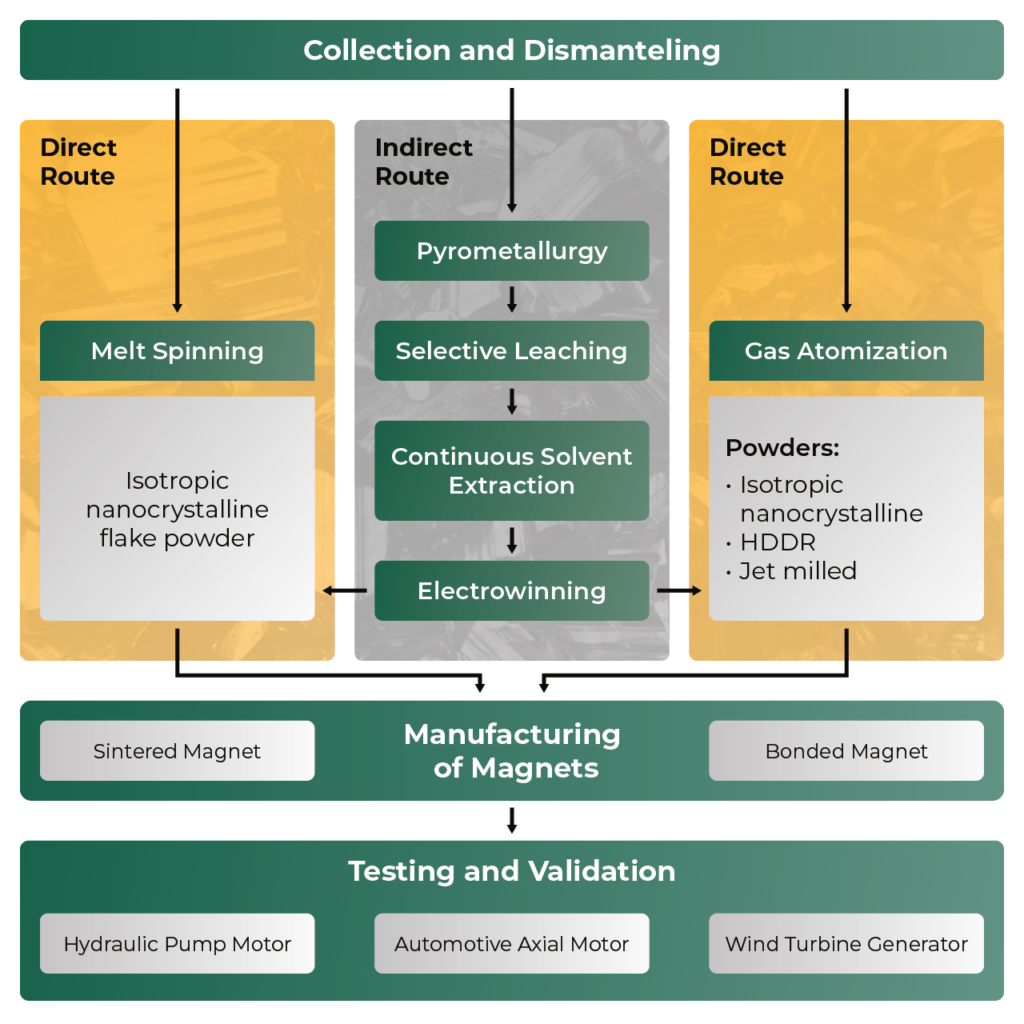
HARMONY develops closed-loop recycling pathways, covering collection, dismantling, material recovery, and the production of new magnets. When direct reuse is not possible, the project also explores methods to recover individual rare earth elements.
Design, policy, and scale
Recycling depends not only on technology but also on product design and infrastructure. Complex motor designs can make recovery difficult, and recycling capacity in Europe remains limited.
Policy initiatives such as the European Critical Raw Materials Act aim to support change. However, cost remains a key factor for wider adoption.
Evidence for a circular future
Large-scale recycling will take time. However, projects like HARMONY already play an important role by generating knowledge and testing solutions.
Step by step, this work supports the transition toward a more circular and resilient magnet value chain in Europe.
To read the full article and gain deeper insights into the future of magnet recycling in Europe, visit EE|Times here.